
A Westchester Property Owner’s Guide to Flood and Water Damage Claims Against Municipalities
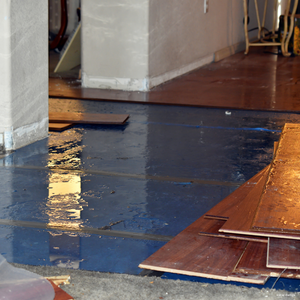
Flooding and serious water damage can turn a home or business into a nightmare overnight. But recovery may be available. In Westchester County, property damage may be legally actionable and compensable when it results from a town, village, or county’s failure to properly maintain its own properties, water systems, storm drains, or local waterways.
At Yankwitt LLP, we regularly represent property owners whose homes or businesses were damaged by flooding, sewer backups, or long-standing leaks tied to municipal negligence in the design or maintenance of infrastructure and property. This guide explains, in straightforward terms, the types of legal claims that may be available, the challenges owners often face, and what municipalities typically argue in response.
When can a municipality be responsible for water damage?
Municipalities are not automatically liable every time flooding or leaks occur. But they can be held responsible when water damage is caused by their negligence — in other words, when they failed to reasonably inspect, maintain, or repair water systems under their control.
Most claims fall into two main categories:
- Flooding caused by poorly maintained waterways or drainage systems
- Leaks caused by failing pipes, water mains, or sewer infrastructure
Flooding caused by neglected drainage or waterways
Flood claims often arise after heavy rain, but rain alone does not excuse a municipality from responsibility. Homeowners may have a valid claim when flooding happens because of that municipality’s misconduct including:
- Failure to clear debris from creeks, culverts, or drainage channels
- Neglected stormwater systems or sewer lines
- Improperly designed or maintained drainage infrastructure
- Increasing the amount or speed of water flowing into nearby waterways
Courts have recognized that when a municipality knows — or should know — that waterways or drainage systems need maintenance, but instead does nothing, it may be responsible for the resulting property damage.
To succeed in a flooding case, a property owner generally must show:
- The municipality owned or controlled the water system or waterway
- It failed to properly maintain or manage it
- That failure caused the flooding and property damage
Water damage caused by leaks or broken pipes
Not all water damage arises from problems with large waterways or systems. Some of the most damaging incidents can involve leaks from broken pipes or water mains.
These cases commonly involve:
- Leaking water mains
- Broken underground pipes
- Aging infrastructure that was never properly inspected
- Delayed or ignored repair requests
Other possible claims: trespass and nuisance
In some situations, water damage isn’t caused by neglect, but by affirmative municipal actions — such as construction or infrastructure improvements that redirect water onto private property.
Trespass
A trespass claim may arise when a municipality intentionally directs water onto private land — for example, by installing drains, catch basins, or culverts that channel water directly onto a homeowner’s property. To succeed on a trespass claim, homeowners typically must show an intentional diversion, not simply natural land grading effects.
Private nuisance
A private nuisance claim focuses on whether a municipality intentionally interfered with a homeowner’s ability to use and enjoy their property. These cases are highly fact-specific and often hinge on engineering evidence.
Can flooding ever be considered a “taking” of property?
In rare cases, water damage caused by municipal action may rise to the level of a constitutional taking, entitling the property owner to compensation. This is known as inverse condemnation or a de facto taking. To succeed, a homeowner must show that the municipality’s actions caused a permanent or ongoing physical invasion of the property — not just occasional flooding during heavy rain.
Courts have repeatedly ruled that:
- Temporary or intermittent flooding usually is not enough
- Permanent or continuous interference with the use of the property may qualify
These claims are difficult to prove but can be powerful when supported by strong evidence.
Common defenses municipalities raise
Municipalities rarely concede liability. Property owners should be prepared for several common defenses.
1. “We were performing a governmental function”
Municipalities are treated like private companies when performing routine services such as maintaining water mains. But when actions are considered governmental — such as planning or policy decisions — municipalities may claim immunity unless there was a special relationship with the homeowner.
2. “This was an act of God”
Towns often argue that extreme weather caused the damage. New York courts, however, apply this defense narrowly. Heavy rain alone usually is not enough — the weather must be truly extraordinary and unforeseeable.
3. “You can’t prove we caused the leak”
Municipalities frequently challenge claims involving underground pipes, especially when the homeowner lacks expert evidence linking the damage to municipal infrastructure.
4. “You failed to file a notice of claim”
Before suing a municipality, homeowners generally must file a notice of claim within a strict deadline. Missing this step can result in dismissal, regardless of how strong the underlying case may be.
The bottom line
Water damage cases against municipalities are complex, technical, and highly fact-specific. Successful claims depend on careful investigation, expert analysis, and a clear understanding of how courts evaluate municipal responsibility.
If your Westchester property has suffered flooding or water damage and you suspect municipal involvement, speaking with experienced counsel early can make a critical difference.